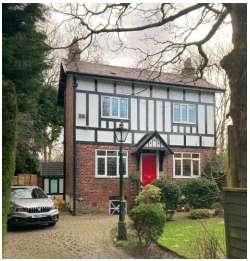
The property suffered flooding to the basement, which was initially pumped out and the basement dried out, however the basement continuously suffered “damp” issues. Investigations were conducted by several companies which included removal of plasterboard to expose the tanking system, drain scans and external culvert cleaning. R E Spencer Ltd conducted investigations using thermal imagery and moisture mapping internally to ascertain where the main area of moisture ingress was occurring, that was causing the continuously “damp” problems.
The investigations revealed the moisture ingress was entering the basement at the rear of the property and was entering above the tanking system. Further external investigations discovered that a neighbouring property at the rear, had been extensively reconstructed (including a fully tanked basement) causing pooling of surface water to the ground, and therefore it was concluded that the water table had been raised due to the mass of concrete (the reconstructed neighbouring property forcing water over the tanking system). The tanking system was therefore changed to full height of the basement walls, this resolved the “damp” problem.
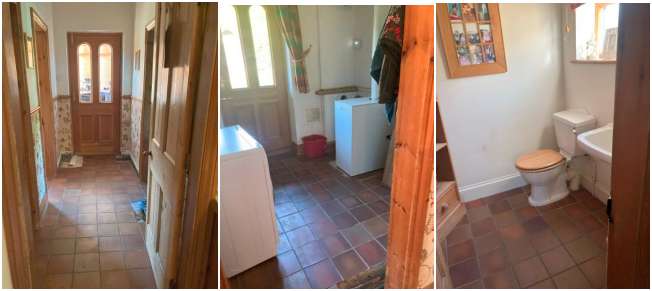
The customers water supplier informed them that they had an unusually high water usage and suggested that they had a leak within the property. A Damage Management company was instructed to carry out Trace and Access, and they carried out extensive intrusive investigations in the utility and kitchen, removing large quantities of tiles without finding the leakage. It was suggested to dig up the external driveway to investigate the incoming water mains to try and locate the leak. R E Spencer Ltd were instructed to visit the site and by use of thermal imagery and moisture mapping we traced the leakage to three sections of the hot water system in the kitchen and hall. The hot water pipes were disconnected under the floor and replaced with surface mounted pipes, a simple drying regime was installed to remove retained moisture within the floor, and the property water usage returned to a more realistic level.
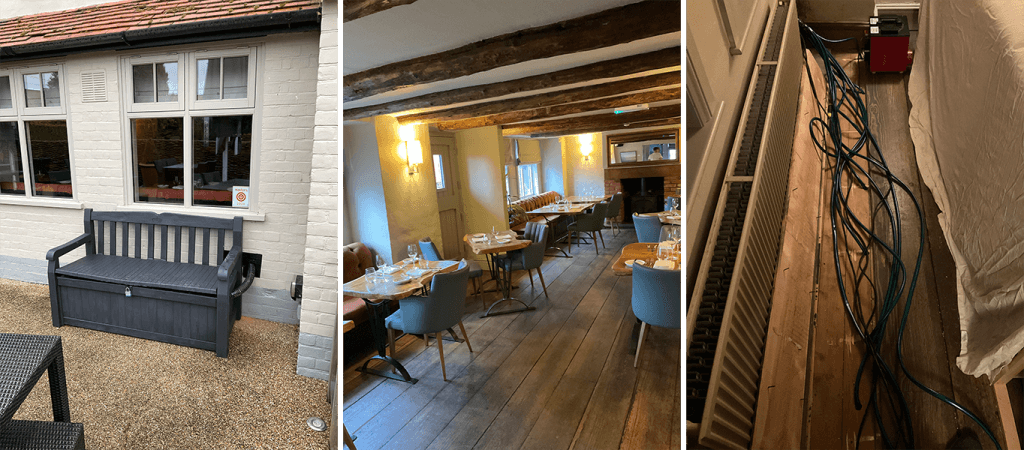
A Michelin Star restaurant had a water leak under the floor of the main restaurant area, this was repaired, but the building contractor who had repaired the leak wanted to remove all of the floor to dry out and treat the timber joists underneath. This would have meant shutting the restaurant for 2-3 months. The Adjusting company instructed R E Spencer Ltd to investigate and establish a method of carrying out the drying and treatment work in the shortest possible time to reduce the Loss of Earnings claim to the Insurer. We installed a drying system that injected dry warm air underneath the entire floor, with the equipment based outside of the restaurant and sensors placed within the floor to monitor the progress of the drying regime. The underneath of the floor and timber joists were dried within 5 weeks and treated with a wettable Silver Peroxide to kill any contamination within the underfloor void, the restaurant remained fully operational during the drying and treatment process, saving the Insurer a considerable amount of money, as no payments were required for Loss of Earnings.
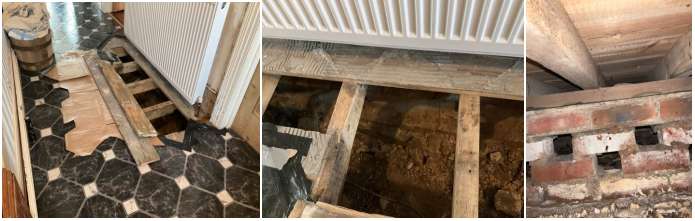
A slow leak from a radiator pipe had caused saturation to the floor void of the ground floor of the property and growth of Serpular Lacrymans (Dry Rot) within the void. The property was tiled throughout the ground floor with the same ceramic floor tiles. The hall had been opened up to access the leaking pipe, and the Contractor had recommended removal of all of the ground floor ceramic floor tiles, floorboards and timber joists. R E Spencer Ltd were appointed to investigate and provide any alternative solutions. It was agreed that the underfloor void of the property could be pressure treated with wettable Silver Peroxide to destroy the Serpular Lacrymans, and a low pressure dry air system be installed within the underfloor void with moisture sensors to monitor and dry the void back to its pre-incident condition, followed by a second treatment of wettable Silver Peroxide, this solution prevented the full strip out of all timber joists and floorboards.
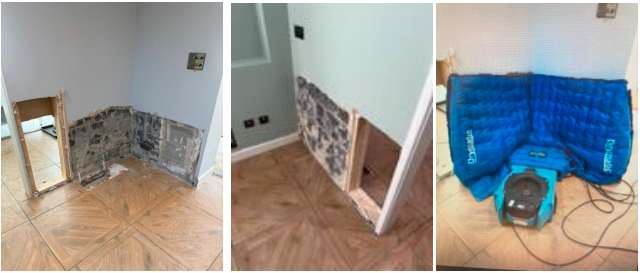
A central heating copper pipe within a concrete slab had leaked, causing capillary water damage to two walls in a kitchen diner. The kitchen diner was open plan and covered a floor area of 100sq metres of large ceramic tiles, the plumber had removed a small section of tile to repair the central heating pipe. The customers building contractor quoted to remove all of the tiles to the kitchen diner to dry the concrete slab underneath. The Adjusting company instructed R E Spencer Ltd to attend site and investigate alternative methods, the ceramic floor and wall area were moisture mapped and checked with a thermal camera, which revealed an area of only 9 square metres of the ceramic floor area around the source of the leak and 500mm height of the wall had been affected by the escape of water. The plaster was removed from the wall to act as a “wick”, and a dry heat mat was installed to draw the moisture from the concrete slab underneath the ceramic tiles to the wall. This process took 3 weeks to dry the concrete slab underneath the ceramic tiles and the wall back to pre-incident condition. The small area of ceramic tile that the plumber had removed was replaced by using a section of tile underneath the base kitchen units.